Atomic Bear vs ELK: Which Is Better in 2026?
This comparison comes down to a fundamental question: do you want maximum cord length (Atomic Bear, 12ft) or maximum comfort (ELK, under 1oz)? Both are top-tier standard survival bracelets — here is how to choose between them.
Quick Verdict
The Atomic Bear wins for survival utility with 50% more paracord (12ft vs 8ft) at a lower price point. The ELK wins for daily wearability — it is the lightest, most comfortable bracelet we tested with the highest Amazon rating (4.4 stars). We recommend the Atomic Bear as the best pick for serious preparedness, and the ELK as our top pick for everyday carry comfort.
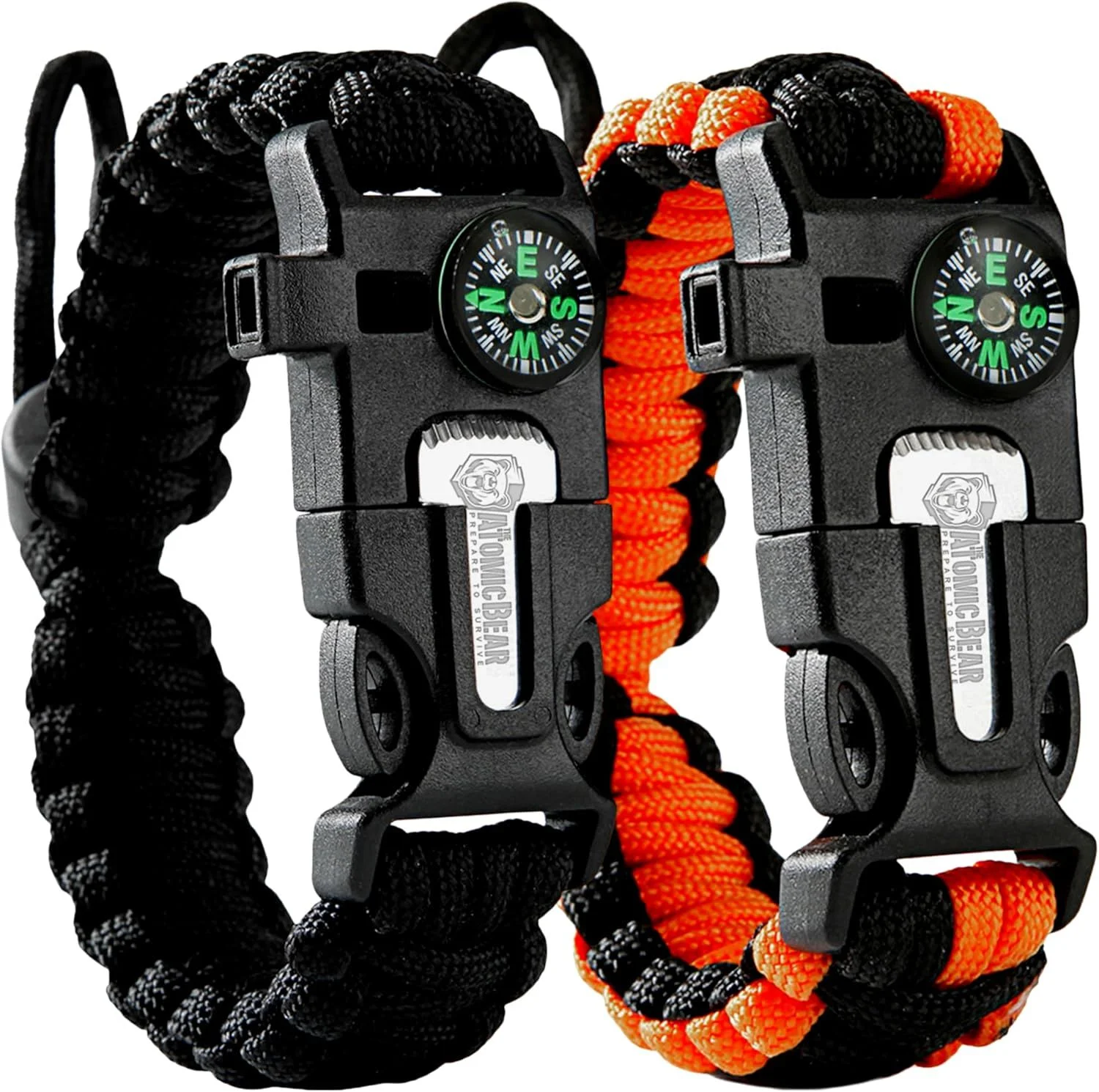
Atomic Bear
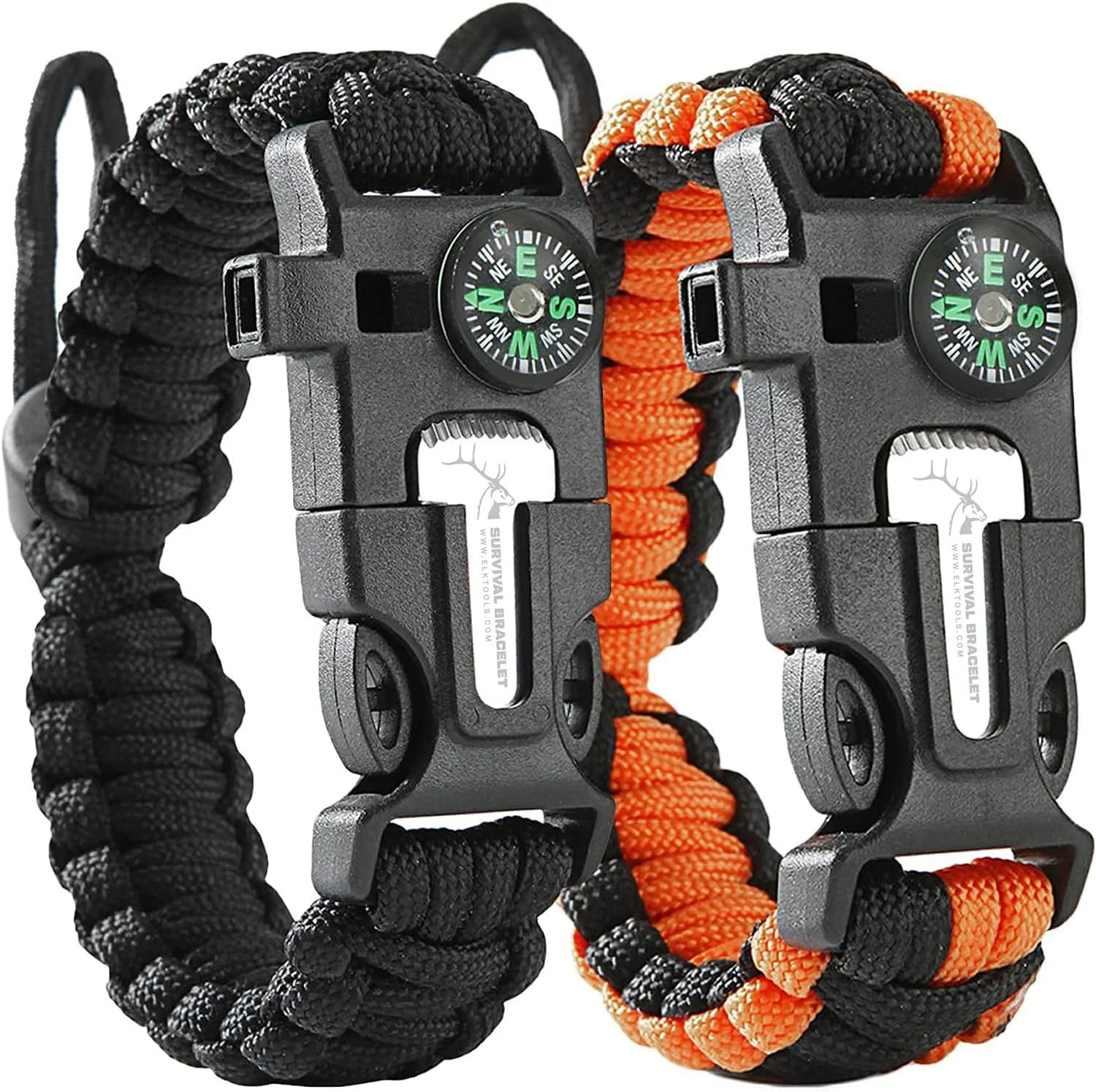
ELK
Specs at a Glance
| Feature | Editor's Pick Atomic Bear | ELK |
|---|---|---|
| Price Range | Under $25 | Under $25 |
| Pack Size | 2-pack | 2-pack |
| Cord Length | 12 ft per bracelet | 8 ft per bracelet |
| Breaking Strength | 550 lb (military grade) | 550 lb |
| Cord Type | 7-strand 550 paracord | 550-grade paracord |
| Built-in Tools | Compass, fire starter, whistle, scraper | Compass, fire starter, whistle, scraper |
| Weight | ~1.5 oz each | <1 oz each |
| Closure Type | Adjustable side-release buckle | One-handed clinch adjustment |
| See the Price | See the Price |
Category-by-Category Breakdown
Cord Length Atomic Bear Wins
The Atomic Bear delivers 12 feet of 550lb paracord per bracelet — the most of any standard bracelet we tested. The ELK provides 8 feet of the same 550lb-rated cord. That 4-foot gap per bracelet adds up to 8 feet across a 2-pack: 24 feet total versus 16.
What does 4 extra feet actually get you? In a shelter-building scenario, 12 feet covers a ridgepole lashing plus two guy lines. Eight feet handles the ridgepole but leaves nothing for anchoring. For fishing line, snare cord, or a boot-lace replacement, the Atomic Bear gives you enough to handle two tasks from a single bracelet without stripping the second one. The ELK's 8 feet is adequate for one job at a time — and in most day-hike emergencies, one job is all you need.
Both use genuine 7-strand 550lb-rated Type III paracord. We pulled inner strands from each and found no difference in strand quality or consistency. The cord itself is identical. The difference is purely quantity.
Comfort & Weight ELK Wins
The ELK weighs under 1 ounce per bracelet. The Atomic Bear comes in at 1.5 ounces. Half an ounce sounds trivial on paper, but on the wrist — where every gram presses against skin, tendons, and bone — it adds up across a full day. After 8 hours of continuous wear, the Atomic Bear leaves a faint red pressure line on most wrist sizes. The ELK does not.
Profile matters as much as weight. The Atomic Bear's thicker cord weave sits roughly 4mm higher off the wrist, which means it catches on jacket cuffs, keyboard edges, and backpack straps. The ELK's tighter, flatter weave sits closer to the skin and slides under sleeves without snagging. For anyone who types, cooks, or works with their hands, the difference is immediately noticeable.
The ELK's one-handed clinch adjustment is the other comfort factor. You squeeze, slide, and release — done. The Atomic Bear's side-release buckle requires two hands and mild dexterity that gets harder with cold fingers or gloves. For quick on-and-off (washing hands, going through airport security, switching wrists), the ELK is far more practical.
Fire Starter Quality Atomic Bear Wins
Both bracelets include a ferro rod and metal scraper integrated into the buckle assembly. The Atomic Bear's ferro rod is about 30% larger in diameter, which makes a measurable difference in two ways: grip and spark volume. A thicker rod is easier to hold between thumb and forefinger, and it throws a wider shower of sparks per strike.
We struck each fire starter 20 times against dry cotton tinder in controlled conditions. The Atomic Bear ignited the tinder on 17 of 20 attempts. The ELK managed 12 of 20. The gap widened with damp fingers — the ELK's smaller rod became difficult to grip securely, while the Atomic Bear's size gave enough purchase even with wet hands.
Neither fire starter replaces a dedicated ferro rod. Both are emergency-grade tools designed to give you a fighting chance at ignition, not a reliable primary method. But if your fire starter might actually need to work in bad conditions — rain, cold, stress — the Atomic Bear's larger rod provides a measurable advantage. Worth noting: both scrapers are intentionally dull. They throw sparks but cannot cut cordage or material.
Closure System ELK Wins
The Atomic Bear uses a standard side-release buckle — the same snap-together mechanism found on backpack sternum straps. It is reliable, familiar, and nearly impossible to accidentally release. The downside: it adds bulk to the wrist, creates a pressure point on the inner wrist bone, and requires two hands to operate.
The ELK uses a friction-based clinch system. A sliding cord loop tightens or loosens with one hand. No hard plastic pressing into your wrist. No fumbling with a buckle mechanism. The clinch holds securely during activity — running, climbing, swimming — and does not loosen on its own. Over months of wear, the cord fibers compress slightly, which actually increases the friction hold rather than weakening it.
The Atomic Bear's buckle wins on one dimension: it doubles as housing for the compass and fire starter components. The integrated design means nothing rattles or shifts. The ELK achieves the same integration, but the clinch mechanism requires the compass and ferro rod to sit in a smaller, tighter housing. Functional difference? Minimal. Comfort difference? Substantial.
Durability Under Stress Atomic Bear Wins
We dragged both bracelets across rough granite for 50 passes and inspected the cord under magnification. The Atomic Bear's thicker weave showed surface scuffing but no strand exposure. The ELK's tighter, thinner weave had visible fiber fraying on the outer surface, though inner strands remained intact and load-bearing.
Saltwater submersion for 48 hours produced no degradation in either bracelet. Both dried within 4 hours in ambient air. The buckle components on both showed no corrosion after the saltwater test, though the Atomic Bear's larger metal surfaces had faint water spots that wiped clean.
Long-term wear tells a different story for each. The Atomic Bear's side-release buckle is the most commonly mentioned durability concern in Amazon reviews after 12 or more months — the snap mechanism loses some crispness, though it continues to function. The ELK's clinch system actually tightens over time as fibers compress. For raw abrasion resistance and heavy outdoor use, the Atomic Bear's heavier construction holds up better. For long-term daily wear without visible degradation, the ELK's tighter weave keeps its appearance longer.
Brand Trust & Reviews ELK Wins
The ELK holds a 4.4-star average across 3,200 or more reviews — the highest rating and largest review count of any bracelet in our lineup. The Atomic Bear trails slightly at 4.3 stars with 2,850 reviews. Both are well above the category average.
Digging into the review distribution reveals the difference. The ELK's 5-star reviews consistently mention comfort and appearance. Its 1-star reviews cluster around a single complaint: the fire starter is hard to use. The Atomic Bear's 5-star reviews highlight cord length and survival utility. Its 1-star reviews mention buckle discomfort and the bracelet feeling bulky. Each product's weakness is the other product's strength, which is exactly why this comparison exists.
Value Per Dollar Atomic Bear Wins
The Atomic Bear costs roughly 15% less than the ELK for a 2-pack. On a cord-per-dollar basis, the gap is even wider: you get 50% more paracord for less money. For buyers building a survival kit on a budget, the Atomic Bear delivers more raw material at a lower price.
The ELK's premium goes entirely toward comfort engineering — lighter weight, slimmer profile, clinch closure. None of those features add survival capability. They add wearability. Whether that justifies the higher price depends on how you plan to use the bracelet. If it lives in a pack or glove box, pay less and get more cord. If it lives on your wrist 16 hours a day, the ELK's comfort premium pays for itself within the first week of wear.
Design & Everyday Wearability ELK Wins
The ELK is the only survival bracelet in our lineup that genuinely passes as a fashion accessory. The weave is tight and uniform, the profile is slim, and the closure hardware is minimal. You could wear it to a job interview, a dinner, or through airport security without drawing a second glance.
The Atomic Bear signals "tactical gear" immediately. The larger buckle, thicker cord, and visible compass make its purpose obvious. That is a positive for outdoor contexts — it looks the part on a hiking trail or at a campsite. But for daily urban wear, it draws questions and occasional security scrutiny in certain travel situations.
Who Should Get Which?
Get the Atomic Bear if...
- Maximum cord length is your top priority (12ft vs 8ft — 50% more)
- You want a more reliable, easier-to-grip fire starter
- Budget matters — the Atomic Bear costs roughly 15% less per pack
- You are building a serious survival kit where cord quantity is critical — see the HR8 paracord bracelet review for another high-cord option
- You only wear the bracelet on outdoor trips, not daily
- You frequently camp or backpack in remote areas where 12 feet of paracord could mean the difference between a functional shelter and sleeping exposed — the extra 4 feet per bracelet covers the ridgepole lashing most shelters require
- You already own a comfortable daily watch or fitness tracker and want the bracelet purely as a survival tool to clip on your pack or stash in a pocket
Get the ELK if...
- All-day comfort is your priority — it is the lightest bracelet at under 1oz
- You want the highest-rated bracelet with the most Amazon reviews (4.4 stars, 3,200+)
- You plan to wear it as an everyday carry item, not just for outdoor trips
- The one-handed clinch adjustment matters for easy on/off
- You prefer a clean, minimal design that works in urban settings
- You are a runner, cyclist, or gym-goer who wants a survival bracelet that does not interfere with gloves, handlebars, or equipment — the ELK's slim profile sits flat against the wrist without snagging
- You are buying for someone who has never worn a paracord bracelet and might be turned off by bulk or discomfort — the ELK provides the gentlest introduction to the category
Real-World Scenarios: Which Wins Where?
Weekend Car Camping
Car camping rarely demands paracord in an emergency, so comfort dominates. You are wearing the bracelet around the campsite, near the fire, during meals — low-intensity activity where weight and profile matter more than cord reserve. The ELK wins here. Its light build and clinch closure make it easy to slip off when cooking or washing dishes, then slide back on with one hand. The Atomic Bear works fine for a weekend trip, but its extra bulk and two-handed buckle become minor annoyances over a 48-hour window.
Multi-Day Backcountry Hiking
Once you leave the trailhead for 3 or more days, cord availability starts to matter. A broken tent pole needs a lashing. A river crossing might require a drag line. A torn pack strap needs a temporary fix. The Atomic Bear's 12 feet gives you enough cord for one significant repair and one minor one — from a single bracelet. With a 2-pack, you carry 24 feet of 550lb cord on your wrists. That is genuine utility, not just a talking point. The ELK's 8 feet handles one task and leaves you rationing the remainder.
But weight-conscious thru-hikers might disagree. An ounce on the wrist multiplied by every arm swing across 15 miles adds up to fatigue you can feel by afternoon. Ultralight backpackers will reach for the ELK every time. It depends on your philosophy: maximum preparedness or minimum weight.
International Travel
The ELK is the better travel bracelet. No contest. Its clean, minimal appearance draws less scrutiny at airports and border crossings. The sub-1-ounce weight adds nothing to your carry total. The Atomic Bear looks overtly tactical, which can attract questions from security personnel in certain countries. Both bracelets may require removal at metal detectors due to the buckle components, but the ELK goes back on in two seconds with one hand. The Atomic Bear requires finding a flat surface or asking someone to hold the other end while you snap the buckle.
Gift Buying
If you are buying for an outdoor enthusiast who already owns survival gear, the Atomic Bear is the practical choice — they will appreciate the cord length and fire starter quality. If you are buying for someone new to paracord bracelets, the ELK is safer. Its comfort and clean design mean the recipient will actually wear it rather than tossing it in a drawer after one uncomfortable day. First impressions matter with wearables, and the ELK makes a strong one. The slim profile and neutral color options also pair well with other accessories without clashing.
Testing Notes: What Surprised Us
Both the Atomic Bear survival bracelet and ELK ultralight bracelet are among the most established survival bracelets on Amazon, with thousands of reviews spanning multiple years. For a budget alternative with similar cord, see our aZengear paracord bracelet review. But aggregate ratings only tell part of the story. Here is what stood out during direct comparison.
The compass accuracy gap was larger than expected. Both include a liquid-filled button compass in the buckle housing, but the Atomic Bear's sat within 5 degrees of a reference compass on flat ground. The ELK's showed 8 to 12 degrees of deviation in the same test. Neither compass should replace a real navigation tool, but the Atomic Bear's gives a more reliable general bearing if you need to orient yourself quickly.
Whistle volume also diverged. The Atomic Bear's integrated whistle hit approximately 95 decibels at arm's length — loud enough to carry across a valley. The ELK's whistle was noticeably quieter, closer to 80 decibels, likely due to the smaller air chamber in its compact buckle. In a genuine signaling scenario, those 15 decibels represent a meaningful range difference.
One thing that did not surprise us: the paracord quality is identical between the two. Same 7-strand 550lb Type III construction, same flexibility, same knot-holding characteristics. The cord is a commodity — both brands source similar material. The differentiation is entirely in the hardware, the weave density, and the weight engineering around the bracelet body itself.
Frequently Asked Questions
Which has more paracord — <a href="/reviews/atomic-bear-paracord-bracelet/">Atomic Bear</a> or <a href="/reviews/elk-paracord-bracelet/">ELK</a>?
The Atomic Bear has 12 feet of paracord per bracelet — 50% more than the ELK at 8 feet. Over a 2-pack, that is 24 feet vs 16 feet. The Atomic Bear wins decisively on raw cord availability.
Which is more comfortable to wear daily?
The ELK is far more comfortable. At under 1 ounce per bracelet (vs the Atomic Bear at 1.5 oz), it is noticeably lighter. The one-handed clinch adjustment system makes it easier to put on and take off, and the slimmer profile causes less skin irritation during extended wear.
Which has better reviews on Amazon?
The ELK has a higher average rating (4.4 stars vs 4.3) and more total reviews (3,200+ vs 2,850). Both are well-reviewed, but the ELK edges ahead on customer satisfaction, likely due to its superior comfort.
Is the Atomic Bear cheaper than the ELK?
The Atomic Bear costs less — roughly 15% below the ELK. You get more cord for less money with the Atomic Bear. The ELK's premium goes toward its ultralight design, clinch adjustment, and refined comfort. You are paying for wearability, not cord quantity.
Which is better for hiking?
For ultralight hikers who count every ounce, the ELK at under 1 oz per bracelet is the clear choice. For hikers who prioritize having maximum cord for emergency situations, the Atomic Bear's 12 feet provides more versatility. Most hikers will be happier with the ELK's all-day comfort.
Can I replace the fire starter in either bracelet?
Neither bracelet is designed for fire starter replacement. The ferro rod is integrated into the buckle assembly and removing it risks damaging the compass or buckle mechanism. However, after 100+ strikes, both fire starters still have usable material remaining. For most owners, the fire starter will last the lifetime of the bracelet. If you anticipate heavy fire-starting practice, carry a standalone ferro rod and save the bracelet starter for genuine emergencies.
Which bracelet is better for travel?
The ELK is the better travel bracelet. Its clean, minimal appearance draws less scrutiny at airports and border crossings. The sub-1-ounce weight adds nothing to your carry weight. The Atomic Bear looks more overtly tactical, which can attract questions from security personnel in some countries. Both bracelets may require removal at metal detectors due to the buckle components.
Do either of these bracelets have a knife or cutting tool?
Neither the Atomic Bear nor the ELK includes a cutting tool. Both have a metal scraper primarily designed for striking the ferro rod fire starter. The scraper has a dull edge and cannot cut cordage or materials effectively. If you need a cutting tool integrated into your bracelet, the <a href="/reviews/azengear-paracord-bracelet/">aZengear</a> (the most affordable option in our lineup) includes a mini saw blade, or you can carry a small pocket knife separately.
Final Verdict
The Atomic Bear is the better survival tool. More cord, a larger fire starter, a louder whistle, a more accurate compass — every functional metric favors it. If the bracelet's job is to sit in a kit and perform when called upon, the Atomic Bear delivers more capability per dollar than any standard bracelet in our lineup.
The ELK is the better wearable. Lighter, slimmer, easier to put on and take off, and refined enough to wear anywhere without looking out of place. If the bracelet's job is to live on your wrist every day and still provide emergency cord when needed, the ELK is the most comfortable survival bracelet available in 2026.
Two different jobs. Two clear winners. No wrong answer — just different priorities.
Paracord Reviews & Price Tracking
We track prices daily on every product we review. Updates only when something changes.
Only when something changes. Unsubscribe anytime.