Building a Bug-Out Bag: Complete 72-Hour Emergency Kit Guide
A bug-out bag is a pre-packed 72-hour emergency kit that you can grab and go when you need to evacuate. From natural disasters to power grid failures and wildfires, having 3 days of essential supplies ready eliminates the dangerous scramble to gather gear under pressure.
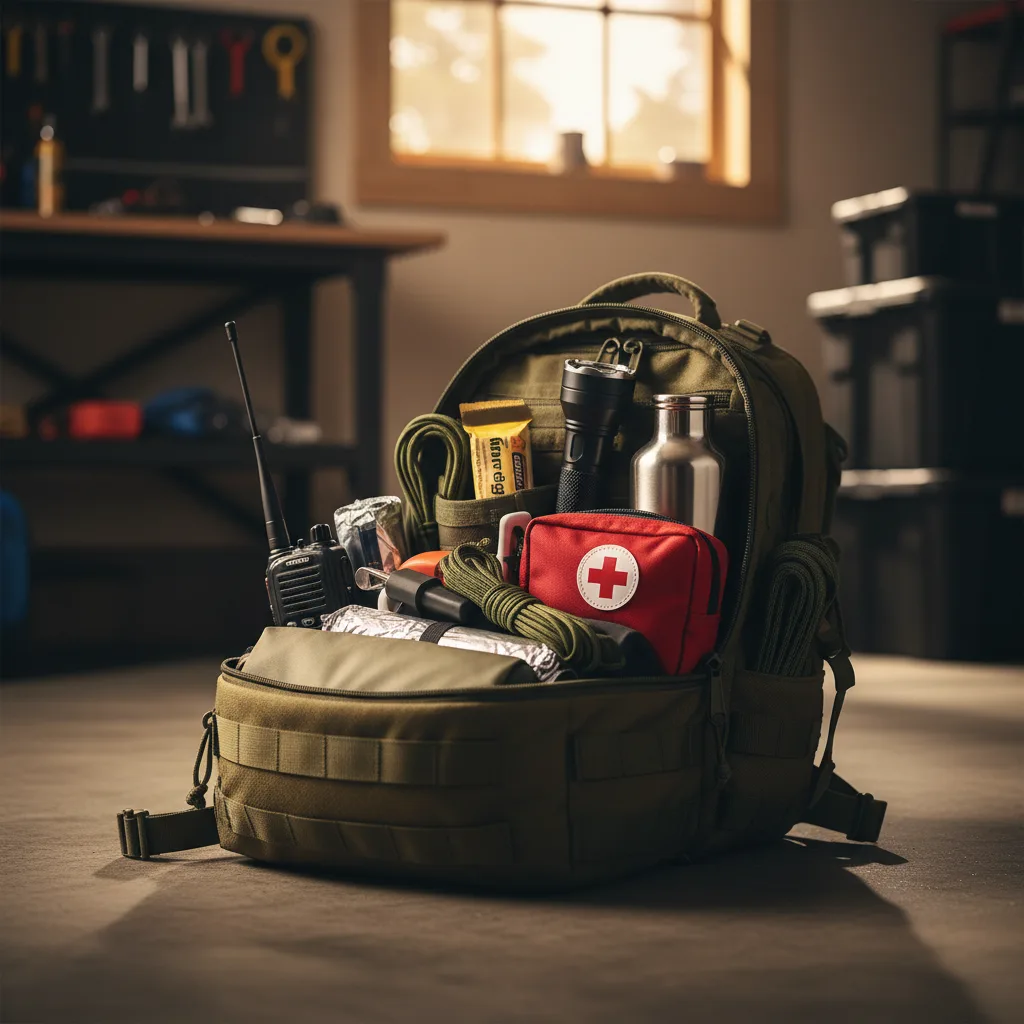
Why You Need a Bug-Out Bag
FEMA recommends that every household maintain a minimum of 72 hours of emergency supplies. In every major disaster — hurricanes, wildfires, earthquakes, flooding — the first 72 hours are when infrastructure fails and emergency services are overwhelmed. You are on your own.
A properly built bug-out bag means you can evacuate in under 5 minutes with everything you need to survive for 3 days. No time wasted packing, no forgotten items, no panic decisions about what to grab.
Watch: Provide & Protect breaks down the Building a Bug-Out Bag (117K views)

The Complete Bug-Out Bag Checklist
Organized by the five survival priorities, in order of importance. Every item earns its weight.
Category 1: Shelter & Warmth
- Emergency bivvy or space blanket — waterproof shelter + body heat retention (4-8 oz)
- Compact rain poncho — doubles as a ground cloth or improvised tarp (3 oz)
- Paracord bracelet (worn on wrist) — 10-12ft of 550lb cord for shelter rigging, always accessible
- Extra paracord (50-100ft) — or 2-3 additional bracelet spares for total of 30-36ft
- Season-appropriate clothing layer — base layer or fleece depending on climate
- Fire starter kit — ferro rod + tinder (cotton balls/petroleum jelly in waterproof container). See our emergency preparedness bracelet guide for setup tips
- Storm-proof matches — backup to ferro rod. Waterproof, wind-resistant
Category 2: Water
- Water bottles (2x 1-liter) — filled and ready. Stainless steel allows boiling directly over fire
- Water filter — Sawyer Mini or LifeStraw for natural water sources
- Water purification tablets — backup to filter. Treats 25+ liters
Category 3: Food
- Energy/granola bars (6-9) — 200-400 calories each, no preparation needed
- Freeze-dried meals (2-3) — just add boiling water. 500+ calories each
- Trail mix (2 bags) — calorie-dense, no refrigeration needed
- Peanut butter packets (4-6) — protein and fat calories in a compact package
- Electrolyte powder packets — prevents cramping during physical exertion
Category 4: Signaling & Navigation
- Whistle — built into paracord bracelet; consider a dedicated Fox 40 as backup
- Signal mirror — visible for miles in sunlight
- Headlamp + spare batteries — hands-free light for nighttime navigation and signaling
- Compass — baseplate compass, not just the bracelet backup
- Area maps (printed) — your phone will die. Paper does not need batteries
Category 5: First Aid & Hygiene
- First aid kit — bandages, gauze, antiseptic, tape, pain reliever, antihistamine, prescription meds (3-day supply)
- Trauma supplies — tourniquet, Israeli bandage, chest seal (take a Stop the Bleed course)
- Hygiene basics — toothbrush, soap sheet, hand sanitizer, toilet paper (compressed)
- Sunscreen and insect repellent — small tubes, season-appropriate
Category 6: Tools & Documents
- Fixed-blade knife — full tang, 4-5" blade. Mora Companion or similar budget option
- Multi-tool — pliers, screwdrivers, can opener. Leatherman or similar
- Duct tape (small roll) — wrap 10ft around a pencil to save space
- Cash in small bills — ATMs do not work without power
- Document copies — waterproof copies of ID, insurance cards, emergency contacts
- Phone charger (battery bank) — 10,000 mAh keeps a phone running for 3+ days
How Paracord Bracelets Fit Into a Bug-Out Bag
Paracord bracelets serve a unique role in bug-out planning because they are the only piece of survival gear that stays on your body 24/7. Everything in your pack can be lost, stolen, or left behind — but the bracelet on your wrist travels with you through every scenario. Our standard bracelets roundup covers the top picks.
Recommended Bug-Out Bracelet Setup
- On your wrist: Atomic Bear survival bracelet — 12ft of cord, reliable fire starter, proven brand
- In your pack (2 spares): HR8 3-Pack budget bundle — at under a few dollars per bracelet, you get 36ft of total cord across 3 bracelets
- For night evacuations: NexfinityOne LED paracord bracelet — SOS LED for signaling and path lighting when power is out
Bug-Out Bag Weight Breakdown
The 20% body weight rule is the ceiling, not the target. A lighter bag lets you move faster and further. Here is how a well-optimized 72-hour bag breaks down by category:
Target Weight Distribution
- Shelter and warmth: 3-5 lbs — emergency bivvy or lightweight tarp (12oz), clothing layer (1-2 lbs), fire-starting supplies (4oz), paracord bracelets and extra cord (6oz)
- Water: 4-6 lbs — two filled 1-liter steel bottles (4.5 lbs), filter (3oz), purification tablets (1oz)
- Food: 3-4 lbs — energy bars, freeze-dried meals, trail mix, and peanut butter packets for 6,000-7,500 calories
- Signaling and navigation: 1-2 lbs — headlamp with batteries (4oz), compass (2oz), signal mirror (1oz), printed maps (2oz)
- First aid and hygiene: 1-2 lbs — first aid kit (8oz), trauma supplies (6oz), hygiene basics (4oz)
- Tools and documents: 2-3 lbs — fixed blade knife (6oz), multi-tool (8oz), battery bank (8oz), duct tape (2oz), documents and cash (4oz)
- The pack itself: 2-3 lbs — a 45L pack with hip belt transfer
Total range: 16-25 lbs depending on climate and season. Winter bags run heavier because of insulation layers; summer bags can come in under 18 lbs with careful selection.
Bag Organization and Accessibility
How you pack your bag is almost as important as what you pack. In an emergency, you need to find critical items without dumping the entire bag on the ground in the dark.
The Zone System
- On your body (immediate access): Paracord bracelet on your wrist, knife on your belt, headlamp around your neck or in a chest pocket. These are the items you need without opening your bag at all.
- Top lid or brain pocket (quick access): First aid kit, snacks, rain poncho, fire-starting tinder, headlamp batteries. Items you grab during brief stops.
- Main compartment top (easy access): Clothing layer, food, water filter. Items you need at camp or during extended stops.
- Main compartment bottom (base layer): Emergency bivvy, extra clothing, spare cordage. Items you only need when setting up for the night.
- External pockets: Water bottles (side pockets), maps and compass (hip belt pocket), multi-tool (exterior MOLLE or daisy chain).
Seasonal Maintenance Schedule
A bug-out bag is not a set-it-and-forget-it project. Food expires, batteries drain, medications lose potency, and clothing needs change with the seasons. Our top-rated survival bracelets roundup covers which models hold up longest. A 15-minute check every six months keeps your bag ready.
Spring Review (March-April)
- Swap winter clothing layer for a lightweight base layer or rain shell
- Replace any food items within 3 months of expiration
- Add sunscreen and insect repellent
- Test all batteries (headlamp, battery bank) and replace if below 80% charge
- Verify fire starter sparks by striking 3-5 times
Fall Review (September-October)
- Swap lightweight clothing for insulating layers (fleece, wool base layer)
- Add hand warmers and extra fire-starting tinder
- Replace expired medications and first aid supplies
- Update printed maps if you have moved or changed evacuation routes
- Verify cash is still in the bag — it has a way of disappearing
- Check paracord bracelet cord for fraying or UV degradation and replace if needed
Paracord Applications During Evacuation
The 550lb paracord packed in your bug-out bag and worn on your wrist is one of the most versatile tools in your kit. According to military field manuals, Type III paracord has over 50 documented field applications ranging from shelter construction to medical improvisation. Here are the applications most relevant to a 72-hour evacuation.
Shelter Construction
A ridgeline strung between two trees is the foundation of any improvised tarp shelter. You need 12-15ft of cord for the ridgeline plus 4-6ft for each corner tie-down. Two HR8 bracelets unraveled for shelter cord give you 24ft — enough for the ridgeline with cord left over for a pair of guy lines. If you packed 50ft of loose paracord in addition to your bracelets, you have enough for a full A-frame shelter with staked tie-downs on all four corners.
Gear Repair and Lashing
Broken pack straps, torn boot eyelets, snapped tent poles. Gear failures multiply under evacuation stress because you are moving fast over rough terrain with a heavy load. The inner strands of 550 paracord — each rated to roughly 40 lbs individually — work as thread for stitching tears in fabric or webbing. The outer sheath alone holds enough to lash a splint or bind a cracked trekking pole. Pull a 3ft section from your Atomic Bear wrist bracelet, separate the inner strands, and you have 7 usable threads without removing the whole bracelet.
Water and Food Procurement
Inner strands serve as fishing line in a pinch. Not ideal — monofilament is better — but 40lb-rated nylon thread catches panfish and trout from a stream bank when your food supply runs low on day three. You can also use paracord to hang a bear bag 12ft off the ground or rig a simple snare loop around a small game trail. Neither method is efficient enough to rely on for calories, but both extend your food supply when packaged meals run out.
Medical Improvisation
A length of paracord ties a splint to an injured limb, secures a sling made from a bandana or shirt, or creates a tourniquet in a severe bleeding emergency. The flat weave of the aZengear waterproof bracelet cord distributes pressure more evenly than round cord, which matters when tying anything against bare skin for extended periods. Every wilderness first aid course teaches at least three cord-based techniques — splinting, sling tying, and drag-harness construction — that work with standard paracord.
Common Bug-Out Bag Mistakes
- Making it too heavy. A 40-lb bag is miserable to carry for any distance. Stick to the 20% body weight rule and ruthlessly cut items that do not address the five survival priorities.
- Packing gear you have never used. Every tool in your bag should be something you have practiced with. An unfamiliar water filter or fire starter is dead weight.
- Forgetting prescriptions and documents. Three days of critical medication and waterproof copies of your ID are more valuable than an extra knife.
- Treating it as a camping kit. A bug-out bag is for survival, not comfort. Leave the camp chair, coffee maker, and pillow at home. Every ounce should serve a purpose.
- Assembling it and forgetting it. Food expires, batteries drain, seasons change. Review every 6 months. Your spring bag needs different clothing than your winter bag.
Frequently Asked Questions
What size backpack do I need for a bug-out bag?
A 40-55 liter backpack is ideal for a 72-hour bug-out bag. Smaller packs (25-35L) work if you are extremely selective with gear. Larger packs (60L+) encourage overpacking. The pack itself should weigh under 3 lbs and have padded hip belts for load transfer.
How heavy should a bug-out bag be?
Your packed bug-out bag should weigh no more than 20% of your body weight for carrying comfort over distance. For a 160-lb person, that means 32 lbs maximum. Most well-planned 72-hour bags weigh 15-25 lbs depending on climate needs.
What food should I put in a bug-out bag?
High-calorie, shelf-stable foods that require minimal preparation: energy bars (200-400 cal each), freeze-dried meals (just add boiling water), trail mix, peanut butter packets, and jerky. Target 2,000-2,500 calories per day for 3 days — roughly 6,000-7,500 total calories.
How often should I update my bug-out bag?
Review your bag every 6 months. Replace expired food and medications, check batteries, verify water purification supplies, and swap seasonal clothing. A spring and fall review cycle keeps the bag ready year-round.
Should I include a paracord bracelet in my bug-out bag?
Yes — wear one and pack two spares. The bracelet on your wrist is always accessible even if you lose your pack. The spares provide extra cord (24-36ft of 550lb paracord) for shelter building, gear repair, and lashing. The <a href="/reviews/hr8-paracord-bracelet/">HR8</a> 3-pack is a budget-friendly option for this purpose.
What is the difference between a bug-out bag and a 72-hour kit?
They serve the same purpose — sustaining you for 3 days during an emergency evacuation. "Bug-out bag" (BOB) is the preparedness community term; "72-hour kit" is used by FEMA and the Red Cross. The gear list is essentially identical.
Do I need weapons in a bug-out bag?
A quality fixed-blade knife is essential for utility (cutting, batoning, food prep) but we do not recommend treating a bug-out bag as a weapons cache. Focus on the gear that addresses the five survival priorities: shelter, water, fire, signaling, and first aid.
Start Building Your Bug-Out Bag
You do not need to buy everything at once. Start with the paracord bracelet on your wrist, add a water filter and space blanket, then build out the rest over the next month. The important thing is to start.
Ready to Buy? Start Here
Based on this guide, our #1 recommendation:
Atomic Bear Paracord Bracelet Everyday carry and reliable all-around survival preparedness Read Full Review →Can’t Decide? Compare Side by Side
Paracord Reviews & Price Tracking
We track prices daily on every product we review. Updates only when something changes.
Only when something changes. Unsubscribe anytime.