Paracord Bracelet Care & Maintenance Guide
A quality paracord bracelet lasts 2-5 years with minimal maintenance. The cord itself is extremely durable — nylon resists rot, mildew, and most chemicals. But daily wear, UV exposure, and moisture can degrade both the cord and the buckle tools over time. Here is how to keep your bracelet in peak condition.
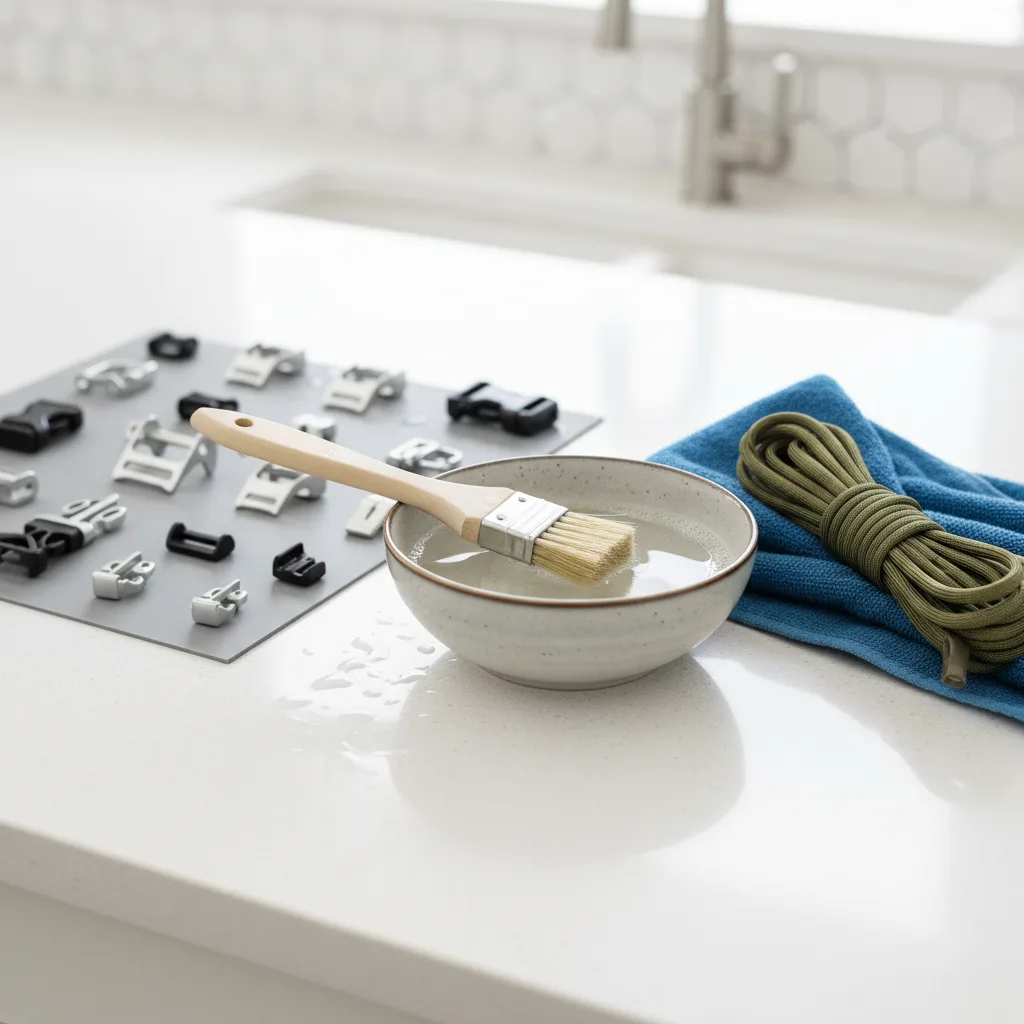
Why Maintenance Matters for Survival Gear
A paracord bracelet that has been on your wrist for two years without care may look fine but perform poorly when you need it. UV-degraded cord can snap under load — our 550 paracord strength test shows what these ratings mean when new vs degraded. A corroded fire striker produces weak sparks. A compass with a cracked seal loses its fluid and becomes useless.
Regular maintenance is not about keeping your bracelet pretty — it is about keeping every component functional for when your safety depends on it. Five minutes of care every few months keeps your bracelet ready for the moment that matters.
Watch: IGN breaks down the Paracord Bracelet Care & Maintenance (138K views)

Routine Cleaning (Monthly)
Clean your bracelet once a month if you wear it daily, or after any exposure to saltwater, mud, sweat-heavy activity, or chemicals.
Step-by-Step Cleaning
- Remove the bracelet and unbuckle it so you can access the full length of cord and all buckle surfaces.
- Mix lukewarm water with a few drops of mild dish soap in a bowl. Avoid hot water — temperatures above 120F can weaken nylon fibers.
- Submerge and gently scrub using a soft-bristle brush (an old toothbrush works perfectly). Work along the cord weave to remove embedded dirt, sweat salts, and skin oils.
- Rinse thoroughly under clean running water. Soap residue attracts dirt and can make the cord feel stiff.
- Air dry completely — hang the bracelet in a well-ventilated area out of direct sunlight. Allow 4-8 hours for full drying before wearing again.
Deep Maintenance (Every 3-6 Months)
Beyond basic cleaning, inspect and maintain each tool component every 3-6 months:
Cord Inspection
- Check for fraying: Look along the outer sheath for loose fibers or worn spots, especially where the cord wraps tightest around the buckle.
- Check for discoloration: Heavy fading (especially in colored cords) indicates UV degradation. Faded cord may have lost 10-20% of its rated strength.
- Flex test: Bend a section of cord sharply. If the sheath cracks or bunches instead of bending smoothly, the nylon is becoming brittle.
Fire Starter Maintenance
- Test sparks: Strike the ferro rod 3-5 times. Strong sparks confirm it is functional. Weak or no sparks may mean a dull striker — sharpen the edge with a fine metal file.
- Clean the rod: Wipe the ferro rod with a dry cloth to remove any oxidation or residue. A light pass with fine sandpaper restores a fresh sparking surface.
- Check striker edge: The scraper/striker should have a sharp 90-degree edge to catch the ferro rod surface. Rounded edges produce fewer sparks.
Compass Check
- Verify against a known compass: Compare the bracelet compass reading to a phone compass or dedicated compass. If they disagree by more than 15 degrees, the bracelet compass may need replacing.
- Check for bubbles: Air bubbles in the compass liquid indicate a seal failure. A small bubble may not affect function, but a large bubble makes the needle sluggish or inaccurate.
Buckle Inspection
- Release test: The buckle should snap open and closed firmly. If the release is loose, the buckle may separate during activity.
- Crack check: Inspect plastic buckles for hairline cracks, especially around the release tabs. Cracked buckles will fail under stress.
- Lubrication: A tiny drop of silicone lubricant on the release mechanism prevents sticking. Do not use WD-40 or petroleum-based lubricants — they attract dirt.
Environmental Threats to Your Bracelet
UV Exposure (Biggest Long-Term Threat)
Ultraviolet radiation breaks down nylon polymer chains over time. Learn more about cord durability in our paracord waterproofing guide. After 12+ months of constant sun exposure, paracord can lose 20-40% of its tensile strength while still looking intact. This is the most dangerous form of degradation because it is invisible.
- Store spare bracelets away from direct sunlight
- Consider rotating between two bracelets to reduce per-bracelet UV exposure
- If your bracelet is heavily faded, treat it as emergency-only and get a fresh one for load-bearing tasks
Saltwater
Salt crystals embedded in the cord weave act as abrasives and attract moisture. Rinse your bracelet thoroughly with fresh water after any saltwater exposure — ocean swimming, sea kayaking, or coastal hiking in spray conditions.
Chemicals
Chlorine, bleach, solvents, and petroleum products all degrade nylon. Remove your bracelet before handling chemicals, cleaning with bleach, or working on vehicles. If exposed, rinse immediately with water and mild soap.
Extreme Cold
Nylon becomes slightly more brittle below 0F (-18C). The cord is still functional, but avoid sharp bending or sudden jerking loads in extreme cold. Plastic buckles are more susceptible to cold cracking — handle them gently in winter conditions.
Maintenance Schedule at a Glance
Keeping track of when to clean, inspect, and replace components is easier with a simple schedule. Here is the maintenance cadence we recommend for daily-wear bracelets:
Weekly (30 seconds)
- Rinse under water if exposed to heavy sweat, dirt, or saltwater
- Wipe the buckle dry — moisture trapped in the mechanism causes corrosion over time
Monthly (5 minutes)
- Full hand wash with mild soap and soft brush
- Air dry completely before re-wearing
- Work the buckle release mechanism 10-15 times to prevent stiffening
Every 3 Months (10 minutes)
- Inspect cord for fraying, stiffness, or discoloration
- Test fire starter — 3-5 strikes to verify spark production
- Compare compass against a known reference (phone compass app)
- Check buckle for cracks, especially around release tabs
- Apply silicone lubricant to buckle mechanism if stiff
Every 12 Months (15 minutes)
- Full cord integrity assessment — flex test at multiple points along the weave
- Evaluate whether UV fading indicates measurable strength loss
- Assess whether the fire starter ferro rod is thinning from use
- Decide whether to continue wearing or rotate to a fresh bracelet
Field Repair Techniques
Sometimes damage happens in the field — a buckle cracks during a fall, the cord frays on a sharp edge, or the fire striker gets dropped in water. Here is how to handle common field issues without replacing the entire bracelet.
Frayed Cord Repair
If the outer sheath frays at a single point, you can temporarily seal it by melting the frayed nylon fibers with a lighter flame. Hold the flame 1-2 inches away and rotate the cord slowly — you want to melt and fuse the loose fibers, not burn through the sheath. This field repair extends the bracelet's life by weeks, but the repaired section will be stiffer and slightly weaker than the original weave. Plan to replace the bracelet when you return home.
Loose Buckle Fix
If a side-release buckle becomes loose and separates during activity, wrap a small rubber band or piece of tape around the connection point. This adds friction that keeps the buckle seated. For the HR8's button-snap fastener, a loose snap can sometimes be tightened by gently squeezing the male snap component with pliers — just enough to increase the friction fit without deforming it.
Wet Fire Starter Recovery
A ferro rod that has been submerged in water will not spark until dried. Wipe it vigorously with a dry cloth or your shirt hem, then scrape the rod surface 5-10 times with the striker to expose fresh metal beneath the wet oxidation layer. The first few scrapes remove wet residue; subsequent scrapes should produce sparks. Ferro rods are not damaged by water — they just need a dry striking surface to function.
When to Replace Your Bracelet
Replace your bracelet when any of these conditions appear. Browse our best standard bracelets for replacement options:
- Cord fraying or stiffness: If the outer sheath is frayed in multiple spots or the cord feels brittle rather than flexible, the structural integrity is compromised.
- Buckle cracking: A cracked release tab will fail at the worst possible time. Do not wait for complete failure.
- Fire starter depletion: After hundreds of strikes, the ferro rod becomes too thin to hold or produce adequate sparks.
- Compass failure: Large air bubbles, free-spinning needle, or consistent inaccuracy means the compass seal has failed.
- Major UV degradation: Severely faded cord that has been in constant sun for 2+ years should not be trusted for load-bearing applications.
Seasonal Care Adjustments
Maintenance needs shift with the seasons. Nylon responds differently to summer humidity than to dry winter cold, and the tools built into your bracelet face distinct seasonal stresses. Adjusting your care routine by quarter keeps every component in working order year-round.
Summer (High UV and Sweat)
Summer is the hardest season on paracord. Extended UV exposure accelerates polymer breakdown in nylon fibers, and daily sweat deposits salt and oils deep into the weave. Rinse your bracelet after every heavy-sweat activity — trail runs, yard work, long hikes in direct sun. A quick 30-second rinse under a faucet prevents salt from crystallizing inside the cord. If you spend most of your day outdoors between May and September, consider rotating between two bracelets. Half the UV hours per bracelet means roughly double the functional lifespan.
Winter (Cold and Dry Storage)
Cold air makes nylon slightly stiffer and plastic buckles more brittle. Avoid yanking a frozen buckle open — warm it in your hands for a few seconds first. Indoor heating dries out silicone lubricant faster, so re-apply a drop to the buckle mechanism at the start of winter. If you store spare bracelets in an unheated garage or vehicle, bring them inside periodically. Repeated freeze-thaw cycles stress the compass seal and can introduce air bubbles that degrade needle accuracy over time.
Long-Term Storage Tips
- Store spares in a cool, dark drawer — UV-free and temperature-stable
- Keep buckles unbuckled during storage — prevents spring memory loss in the release tabs
- Avoid sealed plastic bags — trapped moisture can cause mildew even on nylon. Use breathable cloth bags or open shelving
- Rotate stock: If you have multiple bracelets, rotate which one you wear. This distributes UV exposure and mechanical wear
Recommended Bracelets for Longevity
Best for Daily Wear: ELK (budget-friendly 2-pack)
Under 1oz and the most comfortable bracelet tested. The clinch closure puts less stress on the buckle mechanism than side-release designs, extending service life.
Best Water Resistance: aZengear waterproof 2-pack
Waterproof-treated cord resists moisture absorption, making it the best choice for wet environments and swimmers.
Best for Replacement Rotation: Atomic Bear budget 2-pack
At under seven dollars per bracelet with 12ft of cord, it is affordable enough to replace annually while repurposing old cord as loose cordage.
Frequently Asked Questions
How do I wash a paracord bracelet?
Hand wash with lukewarm water and mild soap (dish soap works). Gently scrub the cord with a soft brush, rinse thoroughly, and air dry completely before wearing again. Avoid hot water, bleach, and machine washing — heat weakens nylon fibers.
Can I wear my paracord bracelet in the shower?
Occasional water exposure is fine, but daily shower wear accelerates soap residue buildup and can weaken the cord over time. Remove it before showering, or rinse and dry it thoroughly afterward if you forget.
How long does a paracord bracelet last?
With proper care, a quality paracord bracelet lasts 2-5 years of daily wear. The cord itself is extremely durable — nylon resists rot and mildew. The buckle and tools are the components most likely to wear out first. UV exposure is the biggest enemy of long-term cord strength.
Will chlorine from a pool damage my bracelet?
Repeated chlorine exposure degrades nylon fibers over time. Remove your bracelet before swimming in chlorinated pools. Saltwater is less damaging but should be rinsed off promptly. Freshwater lakes and rivers are fine.
How do I fix a stuck buckle?
Apply a tiny drop of silicone lubricant (not WD-40, which attracts dirt) to the buckle mechanism. Work the release several times. If the buckle is cracked or permanently jammed, replace the bracelet — a buckle that fails in an emergency defeats the purpose.
Should I test my fire starter regularly?
Yes — test your ferro rod every 3-6 months. Strike it 3-5 times to verify it still produces strong sparks. Ferro rods degrade very slowly (thousands of strikes per rod), but the striker edge can dull. If sparks are weak, sharpen the striker edge with a fine file or replace it.
Keep Your Bracelet Ready
Five minutes of care every few months keeps your survival bracelet functional when it matters. Clean it, inspect it, test the fire starter, and replace it when components wear out.
Ready to Buy? Start Here
Based on this guide, our #1 recommendation:
ELK Paracord Bracelet Ultralight enthusiasts and hikers who count every ounce Read Full Review →Can’t Decide? Compare Side by Side
Paracord Reviews & Price Tracking
We track prices daily on every product we review. Updates only when something changes.
Only when something changes. Unsubscribe anytime.