Paracord Bracelets for Emergency Prep: Complete 2026 Guide
Emergency preparedness comes down to one truth: the only gear that matters in a crisis is the gear on your body when it happens. A paracord survival bracelet puts fire starting, signaling, navigation, and 8 to 12 feet of 550lb-rated cordage permanently on your wrist.
We have evaluated every major survival bracelet through the lens of real emergency scenarios — not just wilderness survival, but the urban and suburban emergencies that are statistically far more likely to affect most families. In this guide, we cover how paracord bracelets fit into a layered preparedness plan, which features matter most for different emergency types, and which specific models we recommend for personal carry, family kits, and go-bags.
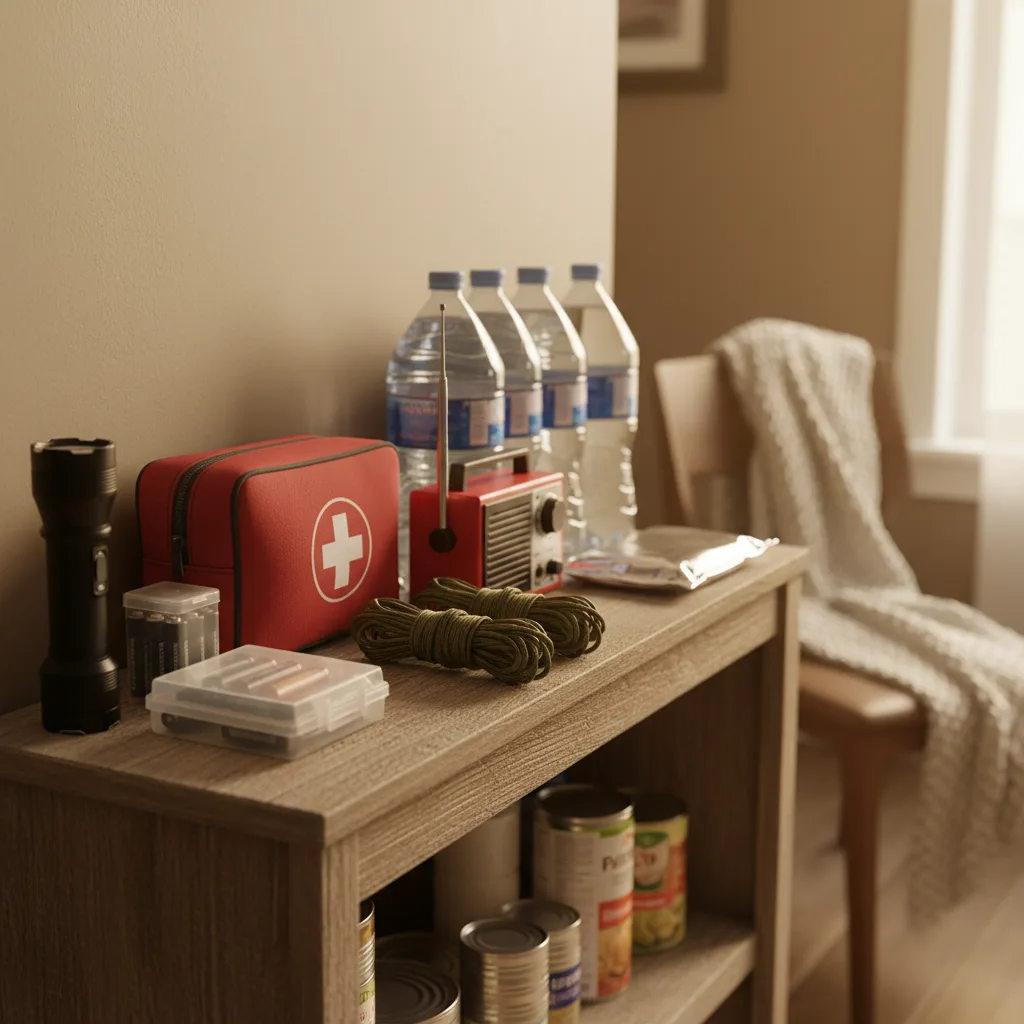
Why Emergency Planners Rely on Paracord Bracelets
Emergency preparedness experts rank cordage among the top five survival priorities alongside shelter, fire, water, and signaling. Paracord — with its 550lb tensile strength, 7-strand inner construction, and resistance to rot — is the standard. A survival bracelet compresses 8 to 12 feet into a wearable format under 2 ounces.
The built-in tools address three additional survival priorities in a single item. The ferro rod fire starter works in any weather condition — rain, snow, wind, altitude — when matches are soaked and lighters are empty. The whistle carries a distress signal farther than the human voice and does not fatigue over hours of use. The compass provides directional orientation when GPS and cell service are down. These are not luxury features. They are the tools that FEMA, the Red Cross, and military survival manuals list as foundational.
Emergency Scenarios Where Paracord Bracelets Prove Their Value
Understanding specific scenarios helps you choose the right bracelet features for the emergencies most likely to affect your household.
Power Outages and Storms
Extended power outages are the most common household emergency in the United States. When the lights go out, you need hands-free illumination, fire starting for heat (if your furnace relies on electricity), and signaling capability if your area is hit by severe weather. The NexfinityOne LED bracelet provides an SOS flashlight with three modes — steady, strobe, and SOS morse code — that operates directly from your wrist. The LED is visible to 32 feet and runs on a replaceable lithium coin cell.
Vehicle Breakdowns
A car breakdown on a rural road at night is one of the most common emergency situations where preparedness tools make a measurable difference. See our best standard bracelets ranking for the most reliable options to keep in your car kit. Paracord can secure a dragging bumper, lash a trunk lid closed, tie a distress flag to your antenna, or improvise a tow connection for short distances. The fire starter provides a signaling spark visible at range, and the whistle signals rescuers when you are out of cell range.
Natural Disasters
Earthquakes, tornadoes, hurricanes, and floods displace people from their homes and cut off access to stored emergency supplies. If you are wearing a paracord bracelet when disaster strikes, you have cordage for improvised shelter, fire starting for warmth and signaling, a compass for orientation when landmarks are destroyed, and a whistle for rescue teams searching rubble. The bracelet is the only piece of your emergency kit that evacuates with you automatically.
Evacuation Scenarios
When you have 10 minutes to evacuate, you grab your 72-hour go-bag kit, your family, and the car keys. Everything else stays behind. A survival bracelet is already on your wrist — no time wasted retrieving it, no space consumed in an already-packed bag. During the evacuation itself, paracord lashes gear to a vehicle roof, secures loose items, and creates anchor points for tarps if you end up sheltering in a field or parking lot.
Best Paracord Bracelets for Emergency Preparedness
Emergency preparedness demands reliability above all else. These bracelets are chosen for tool quality, cord integrity, and the ability to perform when your life may depend on them.
Best Overall for Preparedness: Atomic Bear
The Atomic Bear survival bracelet provides 12 feet of genuine 550lb military-grade 7-strand paracord per bracelet — the most usable cordage of any model we tested. In an emergency, cord length directly determines what you can accomplish: 12 feet rigs a ridgeline shelter, hangs a food cache, creates a rescue harness, or lashes a splint. The fire starter produces strong, consistent sparks that ignite prepared tinder in 5 to 10 strikes, even for beginners.
The budget-friendly 2-pack means one for your wrist and one for your go-bag. For emergency preparedness, this redundancy is valuable — you always have a backup even if one bracelet is already unraveled and deployed.
Best for Family Preparedness: HR8 3-Pack
The HR8 paracord bracelet 3-pack delivers three bracelets with 12 feet of 550lb cord each — 36 feet of total emergency cordage — at a budget-friendly price point. This is the most practical family preparedness purchase on the market. Every family member wears their own bracelet with a fire starter, compass, and whistle. Even children old enough to follow instructions can use the whistle for signaling and the compass for basic orientation.
The button-snap fastener is more secure than standard side-release buckles — important during physical activity like running, climbing, or clearing debris. The camo and black color options suit both outdoor and everyday wear. For families building their first emergency plan, equipping everyone with an HR8 bracelet is one of the highest-impact, lowest-cost preparedness steps available.
Best for Power Outages and Night Emergencies: NexfinityOne LED
The NexfinityOne LED survival bracelet is the premium preparedness choice for one reason: the SOS LED. When the power goes out, a wrist-mounted light lets you navigate your home hands-free, signal neighbors or rescue teams through windows, and provide visible location marking in SOS morse code pattern. The three modes — steady on, strobe, and SOS — cover illumination, attention-getting, and international distress signaling.
As the premium option in our catalog, the 2-pack costs more than any other bracelet we recommend. The premium is justified for emergency preparedness because the LED addresses the single biggest danger in power outages: navigating in complete darkness. Falls and injuries spike during blackouts, and a wrist-mounted light prevents them without tying up your hands.
Integrating Paracord Bracelets Into Your Emergency Plan
A paracord bracelet is most effective when it is part of a broader emergency preparedness system, not a standalone solution.
Home Emergency Kit
Your home kit should include water (1 gallon per person per day for 3 days), non-perishable food, a first aid kit, flashlights, batteries, and a battery-powered radio. Add 2-3 paracord bracelets to this kit — they serve as backup cordage when your main rope supply runs out, and as grab-and-wear items during evacuation. The HR8 3-pack fits this role perfectly.
Car Emergency Kit
Keep one spare bracelet in the glove compartment alongside jumper cables, a reflective vest, basic tools, and a blanket. The bracelet provides signaling (whistle, fire), binding (paracord for lashing), and illumination (NexfinityOne LED) in a package smaller than a protein bar. Replace the bracelet annually or after any use.
Go-Bag / Bug-Out Bag
A 72-hour go-bag should include 50 to 100 feet of loose paracord in addition to the bracelet on your wrist. The bracelet is your immediate-access cordage during the first critical minutes. The loose cord in your bag handles larger projects like shelter construction, multiple anchor points, and extended lashing needs. A dedicated 72-hour kit checklist covers the rest of what you need beyond the bracelet.
Personal Carry (Daily Wear)
Wearing a bracelet daily is the simplest and most impactful preparedness habit you can adopt. It requires zero thought after the first day, costs under $15, and keeps survival tools on your body during the 16+ waking hours when emergencies are most likely. Choose based on comfort: the ELK for all-day office wear, the Atomic Bear for maximum cord, or the NexfinityOne if you want an LED always on your wrist.
The Five Survival Priorities and How a Bracelet Addresses Each
Military and civilian survival training organizes emergency needs into five priorities. A single paracord bracelet addresses all five:
1. Shelter
Paracord (8-12ft) creates ridgelines, lashes support poles, and anchors tarps or emergency blankets. In combination with a tarp, poncho, or even a large garbage bag, a bracelet's worth of cord builds a functional shelter in under 10 minutes.
2. Fire
The ferro rod fire starter produces 3,000°F sparks that ignite dry tinder in any weather condition. Fire provides warmth, light, water purification (boiling), cooking, and signaling. Our bracelet fire starter guide ranks every model by spark quality and covers the tinder prep that makes the difference between a first-strike light and 20 wasted strikes. The inner strands of paracord can also serve as tinder when pulled apart and fluffed — though this should be a last resort since it consumes cord.
3. Water
While a bracelet cannot purify water directly, it enables water acquisition. Cord suspends a container over a fire for boiling, creates a solar still frame, or lowers a vessel into a well or stream. The inner strands can also filter large particulates when layered inside a makeshift fabric filter.
4. Signaling
The built-in whistle produces a high-pitched signal that carries farther than the human voice and works indefinitely without fatigue. Three blasts is the universal distress signal. The NexfinityOne LED adds visual signaling — the SOS mode transmits the international morse code pattern visible to 32 feet.
5. First Aid
Paracord improvises splints (lash a straight object to an injured limb), slings (loop over neck to support an arm), and tourniquets (wrap above a wound and twist with a stick). The inner strands work as suture material for wound closure in extreme situations. These are emergency field techniques — seek proper medical care as soon as possible.
Frequently Asked Questions
Why do preppers recommend paracord bracelets?
Paracord bracelets solve the biggest problem in emergency preparedness — you cannot use gear you do not have with you. A bracelet is always on your wrist, providing 8-12 feet of 550lb-rated cord, a fire starter, compass, whistle, and scraper even when your go-bag, car kit, or home supplies are out of reach. Preparedness experts consider wearable tools the last line of defense.
How many paracord bracelets should I include in an emergency kit?
One bracelet per person is the baseline — every family member should wear their own. For a home emergency kit, add 2-3 spare bracelets (the <a href="/reviews/hr8-paracord-bracelet/">HR8</a> 3-pack is ideal for the price). For a car kit, keep one spare bracelet plus the one on your wrist. For a go-bag, one worn bracelet plus 50-100 feet of loose paracord covers extended scenarios.
Can a paracord bracelet really start a fire in an emergency?
Yes. The ferro rod fire starter in survival bracelets produces sparks at any temperature, altitude, and humidity level — it works when matches are wet and lighters are empty. The key is tinder preparation: gather dry material first (cotton balls, dryer lint, birch bark, or paper) and strike the rod firmly at a 45-degree angle. The <a href="/reviews/atomic-bear-paracord-bracelet/">Atomic Bear</a> and HR8 produce the strongest sparks in our testing.
What emergencies can a paracord bracelet actually help with?
Power outages (the <a href="/reviews/nexfinityone-led-paracord-bracelet/">NexfinityOne</a> LED provides hands-free light and SOS signaling), vehicle breakdowns (cord for towing, lashing, or hanging a distress flag), natural disasters (shelter rigging, debris lashing, tourniquet in injury), and evacuation scenarios (gear lashing, signaling with whistle, fire starting for warmth). The 550lb cord and built-in tools address the five survival priorities: shelter, fire, signaling, first aid, and water acquisition.
Should I get one expensive bracelet or multiple cheap ones?
For personal carry, invest in one quality bracelet — the Atomic Bear or HR8 for maximum cord and reliable fire starting. For equipping family members and stocking kits, the HR8 3-pack (three bracelets with 12ft cord each at a budget price) provides the best value. The worst strategy is buying one expensive bracelet and leaving your family without any.
How long does paracord last in storage?
Nylon paracord lasts 10-20 years in dry storage with no measurable strength degradation. UV exposure is the main enemy — stored indoors or in a closed kit, paracord retains its 550lb rating indefinitely. Inspect stored bracelets annually: check for fraying, mildew, or buckle corrosion. Replace if the cord feels brittle or the buckle mechanism sticks.
Is a paracord bracelet better than carrying a knife for emergencies?
They serve completely different functions and you should carry both. A knife cuts and processes materials but cannot bind, lash, tow, hoist, or create tension. Paracord does all of those things but cannot cut. Together, a knife and paracord bracelet cover the two most fundamental survival tool categories — cutting and binding. The bracelet has the advantage of being wearable and always present.
Start Your Emergency Preparedness Today
You do not need a bunker or a year's supply of freeze-dried food to be prepared. You need the tools most likely to matter in the emergencies most likely to happen — power outages, vehicle breakdowns, severe weather, and short-term displacement. A paracord bracelet on your wrist is the single fastest step from "unprepared" to "ready for the basics."
For maximum emergency cordage, the Atomic Bear paracord bracelet provides 12 feet of military-grade paracord with a reliable fire starter. For family preparedness, the HR8 three-pack survival bracelet equips three people at a budget price. And for power outage readiness, the NexfinityOne LED paracord bracelet puts an SOS flashlight on your wrist.
Ready to Buy? Start Here
Based on this guide, our #1 recommendation:
Atomic Bear Paracord Bracelet Everyday carry and reliable all-around survival preparedness Read Full Review →Can’t Decide? Compare Side by Side
Paracord Reviews & Price Tracking
We track prices daily on every product we review. Updates only when something changes.
Only when something changes. Unsubscribe anytime.