Paracord Bracelets for Kids & Scouts: Complete 2026 Guide
A paracord survival bracelet teaches kids practical outdoor skills in a format they actually want to wear. Unlike a compass stuffed in a drawer or a whistle lost in a backpack, a bracelet stays on the wrist — available the moment a child needs to signal for help, check a direction, or learn how emergency tools work.
For scout troops, youth groups, and outdoor-curious families, survival bracelets serve a dual purpose: they are affordable enough to equip every kid in a group, and each tool built into the buckle maps to a real-world skill worth learning. We tested every multi-pack bracelet in our catalog with kids and scout groups in mind. This guide covers which models work best, what safety considerations parents should know, and how to turn a $2 bracelet into a hands-on outdoor education tool.
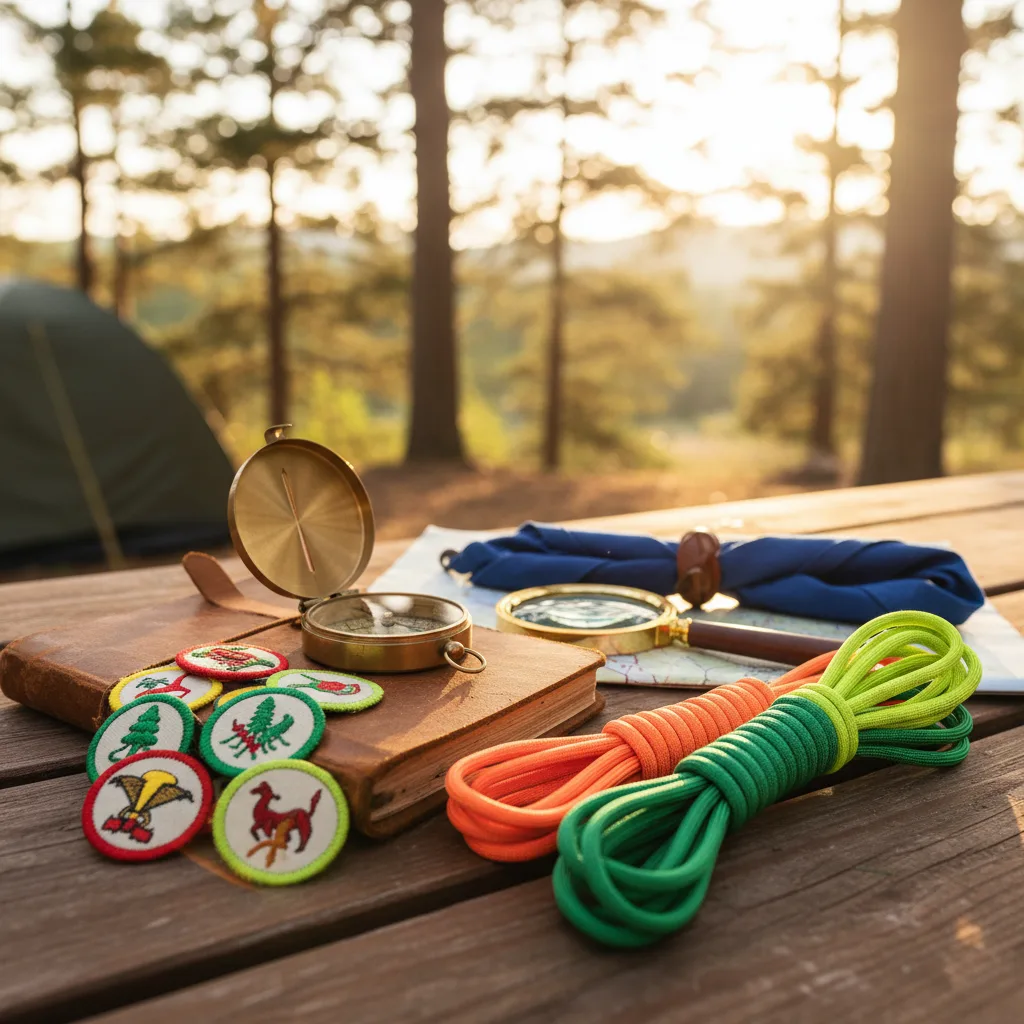
Why Kids and Scouts Benefit from Paracord Bracelets
The best way to teach kids emergency preparedness is to give them tools they carry every day. A paracord bracelet normalizes the habit of having essentials on your person — a principle that carries into adulthood whether they become hikers, first responders, or just well-prepared adults. Our best value pack bracelets ranking covers the most affordable multi-pack options.
Hands-On Skill Building
Each tool in the buckle teaches a specific outdoor skill. The compass introduces basic navigation — take a bearing, follow a heading, find north. The whistle teaches the universal three-blast distress signal. The fire starter (on models that include one) introduces fire safety under controlled conditions. The paracord itself opens the door to knot tying, lashing, and basic bushcraft.
Group Identification
Multi-color packs let every child wear a different color, making group management easier for leaders. "Blue team, meet at the fire pit. Orange team, head to the archery range." It sounds simple, but color-coded wristbands are one of the most effective group management tools in outdoor education.
Emergency Safety Net
A whistle on a child's wrist is always accessible — unlike one buried in a pack or left at the campsite. If a child gets separated from the group, three whistle blasts carry farther than a young voice and do not tire out. The compass provides a basic sense of direction even if the child does not fully understand navigation yet — "the sun sets in the west" combined with a compass reading is enough to orient a lost child toward camp.
Safety Considerations for Young Users
Paracord bracelets are safe for children, but some components require age-appropriate supervision. Here is what parents and leaders need to know.
Fire Starter Supervision
The ferro rod and scraper in most survival bracelets require firm, deliberate scraping at a 45-degree angle to produce sparks. A child cannot accidentally start a fire by wearing the bracelet — the motion is intentional and requires practice. Even so, fire starters should be introduced at age 10-12 under direct adult supervision, with proper tinder preparation and a clear fire safety protocol established before the first strike.
For younger kids (ages 5-9), choose the RLXMARTD 8-pack for younger kids which includes only a compass and whistle — no fire starter or scraper. This eliminates the fire tool entirely while keeping the navigation and signaling features intact. See the full head-to-head in our Smithok vs RLXMARTD comparison.
Wrist Fit and Choking Hazards
A bracelet that is too loose can slip off during activity and become a tripping hazard — or worse, catch on playground equipment. The ELK's clinch adjustment system cinches down to fit wrists as small as 6 inches, providing the most secure fit for smaller children. Standard buckle bracelets (Smithok, RLXMARTD) adjust but may still feel loose on very thin wrists. For children under 8, test the fit before outdoor use.
School Policies
Most schools treat paracord bracelets as standard accessories. However, some zero-tolerance policies may flag visible fire starters or scraper blades. The RLXMARTD 8-pack (compass and whistle only) is the safest choice for school wear. If your child wants to wear a fire-starter-equipped bracelet to school, check the district policy first — it varies widely.
Best Paracord Bracelets for Kids and Scouts
Per-unit cost matters when you are outfitting a group of 4, 8, or 20 children. We ranked these by the combination of price, safety-appropriate features, and suitability for young wrists.
Best for Families: Smithok 4-Pack
The Smithok 4-pack for families equips a family of four for under ten dollars — about two dollars per bracelet. Each bracelet comes in a different color (orange, black, camo, tan), making it easy for every child to identify their own. The full tool suite includes a compass, fire starter, whistle, and scraper. The cord is 550lb-rated 7-core paracord. For family camping trips and backyard survival lessons, the Smithok hits the sweet spot between price and features.
Best for Scout Troops: RLXMARTD 8-Pack
The RLXMARTD 8-pack for troops is purpose-built for group outfitting at roughly a dollar per bracelet. Eight different colors mean every scout gets a unique wristband for identification. The tool set is intentionally simple — compass and whistle only — which makes it appropriate for younger scouts without fire starter supervision concerns. Each bracelet has 10 feet of paracord, which is enough for basic knot-tying lessons and shelter-building exercises.
For a troop of 16-24 scouts, buy 2-3 packs for under $30 total. No other option comes close to this per-unit value for group outfitting.
Best Fit for Small Wrists: ELK
The ELK adjustable bracelet weighs under 1 ounce per bracelet and uses a one-handed clinch adjustment system that cinches to fit wrists as small as 6 inches — the smallest fit of any model in our catalog. At roughly fifteen dollars for a 2-pack, it is pricier per unit than the multi-packs, but the adjustable fit makes it the only bracelet that reliably stays on smaller children without slipping. If your child is under 10 or has very thin wrists, the ELK is the safe choice.
Teaching Survival Skills with a Bracelet
A paracord bracelet is a teaching platform, not just an accessory. Here is how to use each tool for age-appropriate skill building.
Compass Navigation (Ages 8+)
Start with the basics: find north, identify the four cardinal directions, and take a bearing to a visible landmark. Have kids stand in a circle, each reading their bracelet compass, and confirm everyone gets the same heading. Progress to following a bearing on a short orienteering course — 100 yards out, 100 yards back. The bracelet compass is accurate enough for this level of training.
Whistle Signaling (Ages 5+)
Three blasts means "I need help." One blast means "where are you?" Two blasts means "come to me." Practice this signal protocol at the start of every outdoor session until it becomes automatic. A whistle carries 10x farther than a child's voice and requires no effort to maintain. This is the single most important survival skill a child can learn.
Knot Tying (Ages 8+)
Unravel a bracelet and teach 3-4 fundamental knots: the bowline (rescue loop), the taut-line hitch (adjustable tension), the clove hitch (quick attachment), and the figure-eight (stopper knot). Paracord is easier for small hands to manipulate than stiff rope, and at 550lb rated strength, the knots hold real loads for practical demonstrations like hanging a tarp or securing a gear line.
Fire Starting (Ages 10-12, supervised)
Set up a designated fire ring. Prepare a tinder bundle together — dry leaves, birch bark shavings, or cotton balls. Show the proper scraping technique: hold the ferro rod close to the tinder, press the scraper at a 45-degree angle, and pull the rod back (not push the scraper forward — this prevents scattering the tinder). Expect 10-20 attempts before first sparks on a new rod. Celebrate the first successful fire as a milestone achievement.
Camping, Scouts, and Field Trips: Use-Case Breakdown
Scout Campouts
Issue bracelets at the start of each campout and collect them at the end (or let scouts keep them as participation awards). Use different colors for patrol identification. Build a station rotation where each patrol practices one tool: compass station, whistle signal station, knot station, and fire station for older scouts. The bracelet provides all four tools in one piece of gear.
Family Camping Trips
Give each child a Smithok bracelet in their chosen color before leaving home. Teach the whistle protocol during the drive. At camp, use the paracord for a family clothesline project or tarp shelter build. The fire starter becomes a campfire-lighting lesson on the first night. By the end of the weekend, every child has used every tool at least once.
School Field Trips and Outdoor Education
The RLXMARTD 8-pack (no fire starter) is ideal for school-supervised outdoor education. Eight colors per pack make group management effortless. The compass supports orienteering exercises, and the whistle provides an emergency signaling system that does not rely on cell phones or walkie-talkies. At roughly a dollar per student, it fits any field trip budget.
Birthday Parties and Gifts
Multi-pack bracelets make excellent party favors for outdoor-themed birthdays. The RLXMARTD 8-pack covers 8 guests for under ten dollars. Include a printed card with the whistle signal protocol and one simple knot diagram — it transforms a party favor into a learning experience. For a closer friend or family gift, the ELK 2-pack feels more premium at roughly fifteen dollars.
Frequently Asked Questions
What age is appropriate for a paracord survival bracelet?
Children ages 8 and up can safely wear and learn to use a basic paracord bracelet with compass and whistle. Fire starter tools require adult supervision and are best introduced at age 10-12 with hands-on instruction. For younger kids (5-7), choose the <a href="/reviews/rlxmartd-paracord-bracelet/">RLXMARTD</a> 8-pack which includes only a compass and whistle — no fire starter components.
Are the fire starters on kids bracelets dangerous?
The ferro rod fire starters in paracord bracelets require deliberate, firm scraping at a specific angle to produce sparks. A child cannot accidentally start a fire by wearing the bracelet. Still, teach kids how to use the fire starter under direct adult supervision, and treat it like any other fire-making tool — not a toy. Scouts typically learn this skill around age 10-12.
Which bracelet fits smaller wrists?
The <a href="/reviews/elk-paracord-bracelet/">ELK</a> uses a one-handed clinch adjustment system that cinches down to fit wrists as small as 6 inches — the smallest fit of any bracelet in our catalog. The <a href="/reviews/smithok-paracord-bracelet/">Smithok</a> and RLXMARTD have adjustable buckles that fit most children ages 8 and up. For very young children (under 8), the ELK is the safest bet for a secure fit without the bracelet sliding off.
Can scouts earn badges using paracord bracelets?
Paracord bracelets support several scouting skill areas: compass navigation (orienteering badge), fire starting (fire safety and wilderness survival badges), knot tying (using the cord), and emergency signaling with the whistle. The bracelet itself is not a badge requirement, but practicing with its tools builds the exact skills scouts need for advancement.
How many bracelets do I need for a scout troop?
The RLXMARTD 8-pack (under ten dollars) is the most economical for troops — roughly a dollar per bracelet with 8 different colors for easy identification. For a troop of 16, buy two 8-packs for under twenty dollars total. If you need fire starters for a wilderness survival session, supplement with a Smithok 4-pack (also under ten dollars) for the patrol leaders.
Will a paracord bracelet survive a kid wearing it every day?
Yes. 550lb-rated nylon paracord is extremely durable — it handles rain, sweat, dirt, and playground abuse without degrading. The bracelet will get dirty (wash it with mild soap and air dry), but the cord itself will last years of daily wear. The buckle is the weakest point — cheaper models may crack if repeatedly dropped on concrete.
Are paracord bracelets allowed at school?
Most schools allow paracord bracelets since they look like regular accessories. However, models with visible fire starters or knife-like scrapers may violate zero-tolerance weapon policies at some schools. The RLXMARTD (compass and whistle only) is the safest choice for school wear. Check your school district's policy before sending a child with a fire-starter-equipped bracelet.
Equip Every Kid with the Right Bracelet
A paracord survival bracelet costs less than a fast-food meal and teaches skills that last a lifetime. The whistle signal protocol alone is worth the investment for any child who spends time outdoors. The compass builds spatial awareness. The cord introduces practical problem-solving. And for kids, wearing "survival gear" on their wrist is simply cool.
For families, the Smithok 4-pack family bundle at about two dollars per bracelet equips everyone with a full tool suite in their own color. For scout troops and large groups, we recommend the RLXMARTD 8-pack for scouts as our top pick — it beats every competitor on per-unit cost and is the best option for large groups. And for younger or smaller children who need a secure fit, the ELK for small wrists adjusts down to 6-inch wrists.
Ready to Buy? Start Here
Based on this guide, our #1 recommendation:
Smithok Paracord Bracelet Families and small groups who want a bracelet for everyone at the lowest total cost Read Full Review →Can’t Decide? Compare Side by Side
Paracord Reviews & Price Tracking
We track prices daily on every product we review. Updates only when something changes.
Only when something changes. Unsubscribe anytime.