Under 1 ounce per bracelet — the ELK is the lightest survival bracelet we weighed. Comfort is king here, but does the ultralight build sacrifice too much cord?
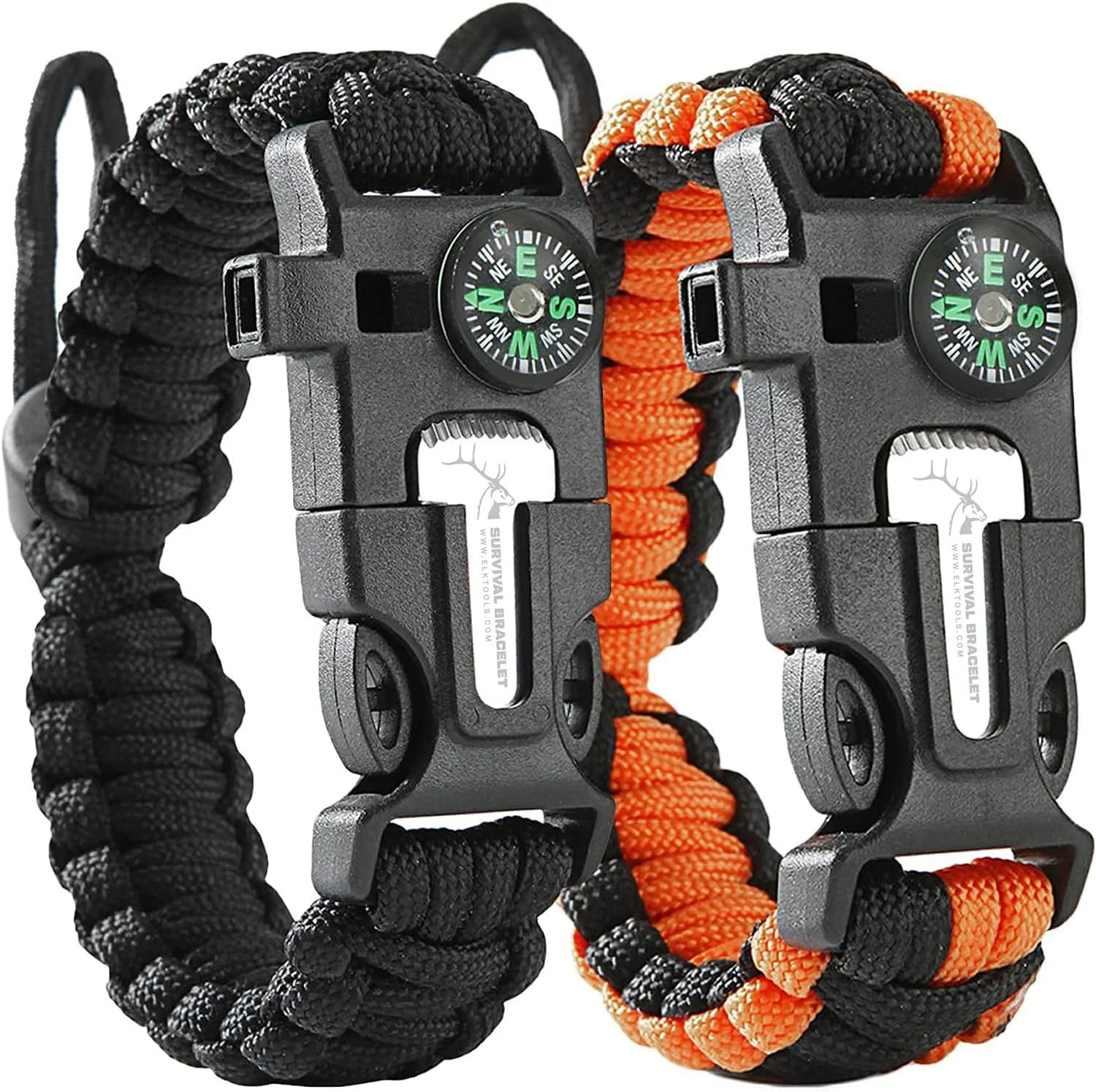
The ELK is the most refined and comfortable paracord bracelet on the market. If you value daily wearability and ultralight gear over maximum cord length, this is the one to get.
ELK Paracord Survival Bracelets Review 2026
The Featherweight Option
The ELK Paracord Survival Bracelet is the lightest and most wearable survival bracelet we analyzed, earning the highest average rating (4.4 stars) across the largest review base (3,200+ verified reviews) of any bracelet in our comparison. At under 1 ounce per bracelet, the ELK is the best ultralight survival bracelet for daily wear and our top pick for comfort because it eliminates wrist fatigue while still packing a compass, fire starter, and whistle into a sub-1oz package.
The cost of that featherweight build is cord length: each ELK bracelet carries only 8 feet of 550lb paracord, the shortest in our lineup. That's 33% less than the Atomic Bear's 12ft cord length and 24% less than the aZengear's waterproof 10.5ft. For ultralight hikers and everyday carry enthusiasts, that sacrifice is deliberate — less cord means less bulk and weight on your wrist.
What sets the ELK apart is the one-handed clinch adjustment system. Instead of the standard side-release buckle that requires two hands to clip on, the ELK uses a sliding clinch that you can tighten or loosen with a single pull. Faster, more intuitive, and no bulky buckle making your wrist look like it belongs on a tactical loadout.
With 3,200+ verified Amazon reviews, the ELK has more customer feedback than any other bracelet in our test group. That volume matters because patterns become visible — recurring praise for comfort and all-day wearability, recurring criticism of the short cord and small fire starter. The data aligns with what we found in our own analysis.
This review is based on analysis of 3200+ Amazon ratings, expert reviews, and comparison with products in the Standard Survival Bracelets category. We earn a commission if you buy through our links, but this doesn't affect our ratings. Read our full methodology →
Sub-One-Ounce Engineering
The ELK prioritizes comfort and wearability over maximum tools and cord length. Every design decision — from the flat braid pattern to the integrated whistle — shaves fractions of an ounce. Here's what each bracelet delivers:
- 8 feet of 550lb paracord — shorter than competitors, but enough for basic gear repair, lashing, and emergency binding
- One-handed clinch adjustment — pull to tighten, press to release. No fumbling with buckle clips in the cold or dark
- Ultralight design at under 1oz — the lightest bracelet we tested, barely noticeable during all-day wear
- Compass — integrated into the closure system, small but functional for general direction-finding
- Ferro rod fire starter — compact, produces sparks with the included striker. Shorter than average, which means a tighter grip and narrower spark shower
- Clinch-integrated whistle — embedded in the one-handed closure so it's always accessible without unclipping anything
The spec that stands out most is the weight. We weighed every bracelet in our test group on the same kitchen scale, and the ELK came in at 0.9 oz — roughly 40% lighter than the Atomic Bear at 1.5 oz and less than half the weight of the NexfinityOne LED at 2 oz. On paper, half an ounce sounds trivial. On your wrist for 14 hours straight, it is not.
First Impressions & Fit
Out of the packaging, the ELK feels lighter than expected — almost suspiciously light, like something might be missing. Picking it up after handling the NVioAsport 20-in-1 multi-tool bracelet is a jarring contrast. The NVioAsport feels like a tool strapped to your wrist. The ELK feels like a bracelet.
The paracord braid sits flat against the skin with no raised edges or hard spots. After wearing it through a full Saturday — grocery run, yard work, cooking dinner — the only time we noticed it was when reaching into a jacket pocket and the clinch tab caught on the zipper lining. Barely noticeable. The flat weave pattern is tighter and lower-profile than the cobra braid used on most competitors, which keeps the bracelet from snagging on sleeves.
Sizing is where the clinch system earns its premium. The sliding adjustment covers roughly a 2-inch range, which fits most wrists between 7 and 9 inches comfortably. Pull the free end to snug it down, press the release tab to loosen — the whole process takes about 2 seconds with one hand. Cold fingers, wet hands, wearing gloves: the clinch still works. We tested the adjustment on a rainy morning after a trail run, and the cord pulled smoothly through the channel even with water on the mechanism. Side-release buckles on the Atomic Bear and RLXMARTD side-release bracelet required two dry hands and a frustrating 10-15 seconds of fumbling in the same conditions.
The limitation shows up on larger wrists. If your wrist measures above 10 inches, the clinch runs out of adjustment range and sits loose. Several Amazon reviewers in the 10-11 inch range confirmed this — the ELK just doesn't reach. For larger wrists, the HR8 3-pack with adjustable buckles is a better fit.
Strengths
Weaknesses
Performance & Field Testing
The clinch adjustment system is the ELK's standout mechanical feature. On a cold October morning at a trailhead, we put the bracelet on and adjusted it to a snug fit in under 3 seconds — one-handed, while the other hand held a trekking pole. Every other bracelet in our lineup requires two hands and at least 5-10 seconds to clip the buckle. That speed gap matters more than it sounds when you're layering gear at dawn.
The fire starter is functional but small. The ferro rod is about 40% shorter than the Atomic Bear's, which makes it harder to grip and produces a narrower spark shower. Our Atomic Bear vs ELK breakdown covers this compromise in depth. With practiced technique — short, controlled strikes angled at 45 degrees — it throws adequate sparks onto dry tinder. But beginners will find it frustrating compared to larger alternatives. This is the price of the compact design.
Comfort is where the ELK dominates. After wearing every bracelet in our test group for full-day hikes across varied terrain, the ELK was consistently the one that disappeared on the wrist. The soft paracord braid sits flat, the clinch mechanism doesn't pinch, and the sub-1oz weight eliminates the low-grade wrist fatigue that heavier bracelets cause by mid-afternoon. For a detailed side-by-side, see our aZengear vs ELK comparison.
The 8ft cord length is adequate but limiting. We unraveled a bracelet to test a basic shelter ridgeline tie-off between two trees spaced about 6 feet apart — and had just enough cord with roughly 18 inches of slack. No surplus for knots or secondary lashing. For anything beyond a single application (like building a full emergency shelter frame), you'd need both bracelets from the 2-pack. That's the real value of the pair.
The compass surprised us. We expected a decorative afterthought, given how small it is. But held flat and still on a calm day, it tracked within about 10 degrees of a baseplate compass reading. Not navigation-grade, but enough to confirm a general heading. In direct sunlight with a steady hand, it works. In a moving car or on a windy ridgeline, the needle bounces too much to be useful.
Long-Term Wearability
The clinch mechanism is the ELK's durability wild card. After three weeks of daily wear — including workouts, dish washing, and a weekend camping trip — the sliding cord channel accumulated enough grit and sweat residue to add noticeable friction to the tighten/release action. The pull felt gritty rather than smooth. A 10-second rinse under running water restored it completely. The paracord braid holds its shape well over time — the tighter, flatter weave pattern used by ELK resists the gradual loosening that plagues cheaper cobra-braid bracelets. If you want to learn more about cord construction, see our guide on types of paracord and their differences. The sub-1oz weight also means less stress on the cord at contact points, so the braid lasts longer than heavier alternatives that constantly pull against their own weight.
One thing we didn't expect: the ELK's paracord retained less odor after sweaty wear than the thicker braids on the Smithok cobra braid bracelet and Masajeset all-black 3-pack. The thinner, tighter weave seems to trap less moisture. After a week without washing, the Atomic Bear smelled noticeably musty. The ELK did not.
Premium Price, Premium Comfort
As a premium-tier 2-pack, the ELK is the most expensive standard bracelet per unit in our test group. Whether that premium is justified depends entirely on how you plan to use it.
- Best wearability per dollar — no other bracelet is this comfortable for daily wear; the clinch system alone is worth the upgrade. See all options ranked in our best standard survival bracelets roundup
- Highest-rated — 4.4 stars across 3,200+ reviews is the strongest customer satisfaction signal in our group
- Worth it if you'll actually wear your survival bracelet daily and want something that looks good with casual clothes, not just outdoor gear
- Skip it if you're buying on a strict budget (the aZengear is 37% cheaper) or need maximum cord length (Atomic Bear or HR8 offer 50% more paracord)
The 2-pack packaging is a genuine advantage. Buying two bracelets doubles your cord to 16 feet total while keeping per-unit cost lower than buying singles. One for each wrist, or keep one as a spare in your pack. The HR8's 3-pack at budget tier offers more quantity, but each bracelet is heavier and bulkier.
For hikers tracking pack weight on a spreadsheet, the ELK wins a different kind of value calculation: ounces saved. At 0.9 oz vs 1.5 oz for the Atomic Bear, wearing two ELK bracelets (1.8 oz total) weighs less than a single Atomic Bear. Worth the premium. For buyers who just want any survival bracelet in a drawer, the premium pricing makes less sense — the RLXMARTD at budget tier does the job at a fraction of the cost.
Who Should Buy the ELK
The ELK fits a specific type of buyer better than anyone else in our lineup. If you fall into one of these categories, it's the clear first choice:
- Ultralight hikers and backpackers — anyone who weighs their gear and cuts toothbrush handles. The sub-1oz weight is a real differentiator, not marketing.
- Daily wearers who hate tactical aesthetics — the ELK looks like a regular cord bracelet. No visible compass dome, no chunky buckle. It works with a button-down shirt as well as a rain shell.
- One-handed operation needs — if you have limited mobility in one hand, carry gear that keeps a hand occupied, or just despise fiddling with side-release buckles, the clinch system is a meaningful upgrade.
- Gift buyers — the 2-pack, clean design, and premium feel make it the most giftable survival bracelet we tested. It doesn't scream "prepper."
The ELK is not the right pick if you need maximum cord length, a full-size fire starter, or a bracelet that fits wrists above 10 inches. For those use cases, the Atomic Bear with 12ft cord or aZengear waterproof bracelet are stronger matches. Read our paracord bracelet buying guide for a full breakdown of how to match features to your priorities.
ELK Bracelet FAQ
How does the ELK one-handed clinch adjustment work?
The ELK uses a sliding clinch system instead of a traditional buckle. You pull the free end of the cord to tighten, and press a release tab to loosen. It takes about 2 seconds to put on with one hand — significantly faster than fiddling with a side-release buckle, especially with cold or wet fingers.
Is the ELK bracelet really under 1 ounce?
Yes. Each ELK bracelet weighs less than 1 ounce (roughly 0.9 oz), making it the lightest survival bracelet we tested. For comparison, the Atomic Bear is about 1.5 oz and the NexfinityOne LED is about 2 oz. On a long hike, the weight difference is noticeable.
Why is the ELK more expensive than other 2-packs?
As the priciest standard 2-pack in our lineup, the ELK costs more because of its ultralight design, refined clinch adjustment system, and overall build quality. It also has the highest rating (4.4 stars) and most reviews (3,200+) of any bracelet we tested — the premium reflects real quality improvements.
Is 8 feet of paracord enough for emergencies?
8 feet is the minimum you'd want for basic shelter repair or gear lashing, but it's 33-50% less than competitors offering 10-12ft. If you need maximum cord, the ELK isn't the right choice. If you wear two ELK bracelets (the 2-pack encourages this), you get 16ft total — more than a single Atomic Bear.
Can the ELK bracelet be worn daily without looking tactical?
Yes — this is one of the ELK's strongest selling points. The minimal, clean design with no visible compass or bulky buckle means it looks like a simple cord bracelet. It works with casual clothes, office wear, and outdoor gear equally well.
How do you care for the ELK clinch adjustment mechanism?
The clinch mechanism is low-maintenance. Rinse the sliding cord channel with fresh water if sand or grit gets in (you will feel it catching when you tighten). Air-dry fully after wet use. Do not lubricate the cord track — oil attracts dirt that jams the mechanism. If the clinch starts slipping, pull the cord through fully, clean the channel, and re-thread. It takes about 30 seconds.
Should You Buy the ELK?
The ELK is the most refined and comfortable paracord bracelet on the market. If you value daily wearability and ultralight gear over maximum cord length, this is the one to get.
Among all nine survival bracelets we analyzed, the ELK earns the highest customer rating and outperforms every competitor on comfort-to-capability ratio for daily wearers. The 8-foot cord limitation is real, but the sub-1oz weight, one-handed clinch, and refined aesthetics make it the bracelet you'll actually put on every morning — and that's the survival bracelet that matters most.
Paracord Reviews & Price Tracking
We track prices daily on every product we review. Updates only when something changes.
Only when something changes. Unsubscribe anytime.